
Nuclear reactor and railgun designed for future Chinese tank
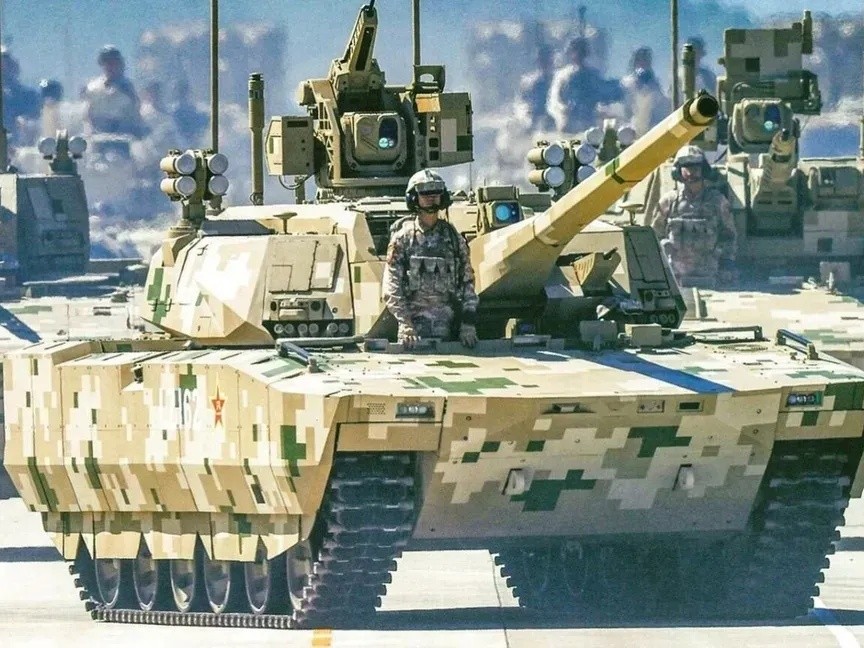
A research study prepared by defense experts in China has revealed a long-term strategic blueprint extending beyond 2045 to develop an advanced electric tank weighing 60 tons, powered by a miniature nuclear reactor and equipped with a 50-megajoule electromagnetic railgun. The study was conducted through a joint effort involving researchers from Inner Mongolia First Machinery Group, the state-key laboratory for special vehicle design and manufacturing, and the Beijing Institute of Technology, and was published in the June 2026 supplement of the specialized Chinese defense journal Acta Armamentarii. Inner Mongolia First Machinery Group is considered a core element within the country's defense industry sector, given its pivotal role in producing and developing armored vehicles. The experts propose a three-stage action plan to implement this ambitious military project; the first stage, targeted before 2035, begins by equipping existing armored platforms with electromagnetic weapons while retaining traditional diesel engines. This design involves integrating a 1,500-horsepower diesel generator, combined with supercapacitors and a flywheel energy storage system to provide the high instantaneous power required to operate the electromagnetic weapon. The first generation of this system will feature a 10-megajoule electromagnetic railgun, while researchers theoretically estimate its range at around 150 kilometers. The vehicle is expected to incorporate electromagnetic armor in its first phase consuming about 2 megawatts of energy, aiming to test and develop this technology without the need for the more complex nuclear power plant designated for the final configuration. The second stage will extend until 2045, increasing the electromagnetic gun's energy to about 20 megajoules and the proposed range to roughly 300 kilometers. The electromagnetic armor will also experience a significant enhancement to consume about 10 megajoules, relying on a 2,000-horsepower diesel generator supported by five tons of advanced energy storage equipment. In the final stage, nuclear power will be integrated through a small modular reactor with a capacity of 10 megawatts using liquid metal cooling, designed to a volume of approximately two cubic meters. The vehicle will employ this reactor to secure the large and sustainable electrical power necessary for the weapon and onboard systems, at which point the electromagnetic gun's launch energy will reach approximately 50 megajoules. Researchers link the projectile's speed at this stage to about 3.5 kilometers per second, with a maximum theoretical range of roughly 450 kilometers. This armament will boast a range far exceeding traditional tank guns, granting the vehicle a hybrid role combining direct-fire armor characteristics and long-range precision strikes. The design focuses on meeting the growing electrical power needs of future armored vehicles, with researchers studying the gradual integration of technologies as power generation and storage evolve. The study pays great attention to integrated power systems such as supercapacitors, storage flywheels, advanced batteries, and microgrids. This paper highlights the confidence of experts in China's defense sector, especially after Beijing introduced the fourth-generation Type 100 main battle tank into service last year, advancing ahead of the rest of the world. China maintains a prominent lead in aircraft capabilities with expectations of preceding the world in introducing sixth-generation fighters. Although the nuclear tank is technically feasible, its economic viability remains a subject of question amid the increasing reliance on low-cost uncrewed systems in ground warfare. As seen in the Russian invasion of Ukraine, tank firepower was secondary to communicating with drones, maintaining mobility, and using advanced active protection, which were the priorities of the Type 100 tank.