Germany Confronts Gas Storage Challenges Amid Warnings of Winter Crisis
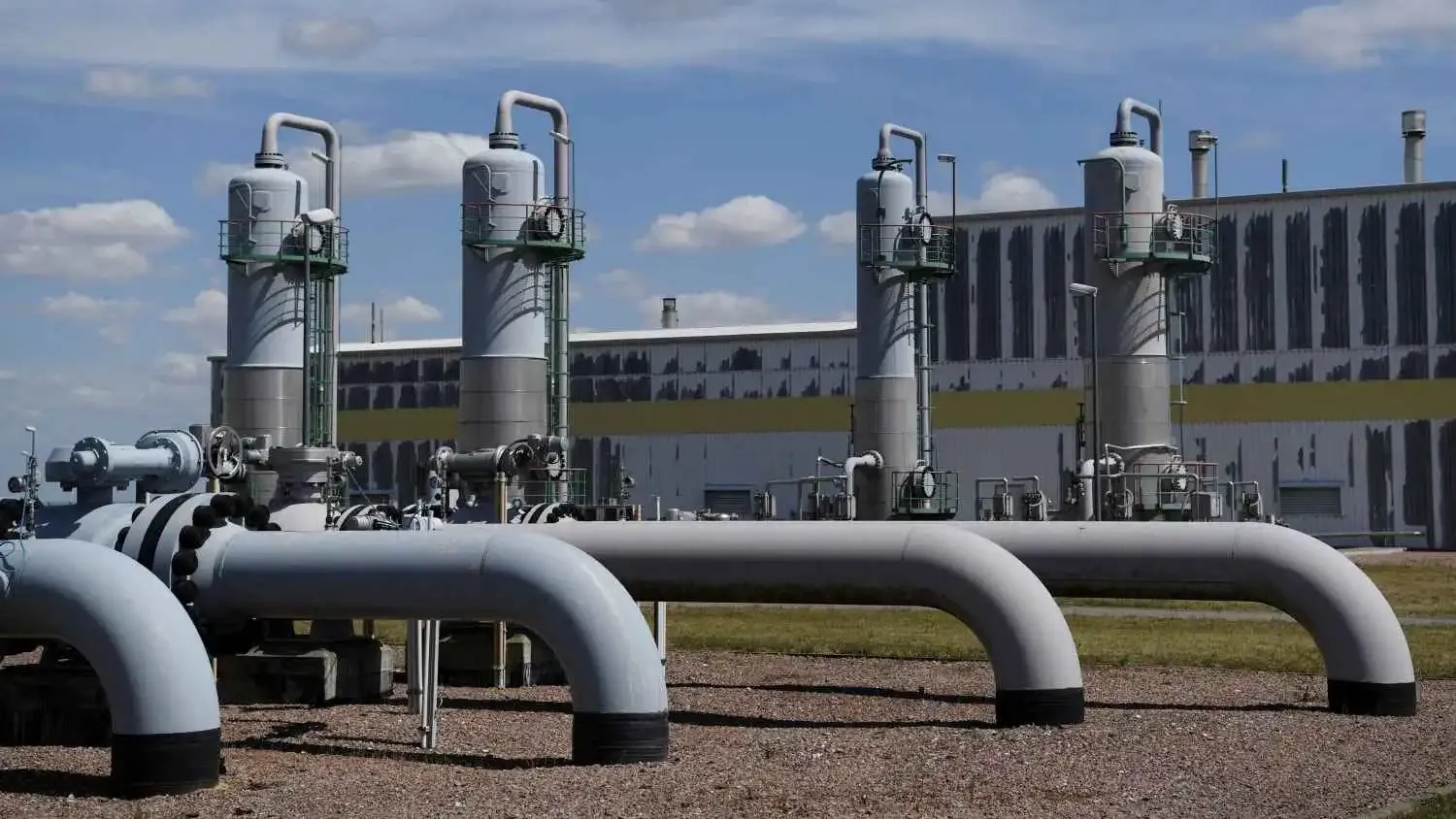
Germany is facing increasing challenges in its race to fill gas storage facilities before the onset of winter. This comes amidst rising gas prices that limit the economic incentive for companies to inject additional volumes into strategic reserves. This situation has prompted urgent calls for stronger incentives to accelerate essential storage operations. According to recent reports, Germany's gas reserves reached approximately 51.5% by August 25th, a significantly lower level compared to the 69% recorded during the same period last year. The country is striving to achieve an overall filling target of 70% by the first of November. Sebastian Heinemann, Managing Director of the Gas Storage Operators' Association (INES), warned that continuing gas injection at current rates might prevent the achievement of the legal target on schedule. Heinemann added that German gas reserves are currently about 45 terawatt-hours lower than they were a year ago, a volume almost equivalent to the entire storage capacity of the Czech Republic. Despite approximately 78% of available storage capacity being booked, booking capacity does not necessarily mean it is filled with gas, as actual gas injection depends on prevailing economic conditions in the market. **High Prices Reduce Storage Viability** The main problem lies in the significant rise in gas prices, which makes the process of purchasing and storing gas during the summer months, and then selling it in winter, less commercially attractive for companies. The benchmark European gas price (TTF) for monthly futures contracts rose to about 69 euros per megawatt-hour on Friday, compared to approximately 29 euros at the beginning of the year. In this context, the German energy company Uniper affirmed that current market conditions are hindering the injection of additional volumes into reserves. The company clarified that price differentials between storage and sale periods have recently improved, but have not yet reached a level that makes additional storage operations economically viable. Nevertheless, Uniper does not believe that Germany faces a severe gas supply shortage, considering that reaching 70% or more by November 1st remains possible if the market provides stronger incentives for storage. **Will Germany Face a Winter Crisis?** The German Ministry of Economic Affairs confirmed that current data does not indicate a risk of gas shortages during the upcoming winter. The ministry explained that supply security does not depend solely on storage levels, as Germany can rely on piped gas imports from Norway, in addition to liquefied natural gas (LNG) and supplies from neighboring countries. The ministry believes that storing gas at a level between 60% and 70% at the start of winter, combined with available imports, would be sufficient to meet demand during a typical winter. However, risks could increase if low storage levels coincide with a severe cold wave or disruptions in gas imports. Heinemann warned that Germany might face difficulties in meeting natural gas demand if low storage levels coincide with a very cold winter, noting the possibility that industrial consumers might be forced to reduce production if prices rise to unbearable levels. Gas remains an important source for the German economy despite declining reliance on fossil fuels, contributing to 16.1% of domestic electricity production in 2025, according to data from the Federal Statistical Office. **Industry Fears Rising Gas Costs** Reports indicate that German industrial companies are closely monitoring storage levels, fearing that the country might be forced to purchase large quantities of high-cost liquefied natural gas during winter to compensate for any potential shortage. The German Pharmaceutical Industry Association warned of the serious repercussions of three factors converging: low storage levels, a severe cold wave, and supply disruptions, especially since some pharmaceutical production processes depend on gas and cannot be easily stopped or switched to other sources. The German Mechanical Engineering Industry Association also warned that an actual gas shortage or a sharp rise in its prices could pose a significant threat to the entire industrial sector. **Government Incentives to Accelerate Storage** The INES association believes that strengthening financial incentives is one of the fastest solutions to accelerate storage operations. The association proposes abolishing some network and gas transmission fees associated with storage, in addition to reducing bureaucratic procedures. If companies do not utilize their booked capacities, and Germany is threatened with not achieving its storage target, unused capacities could be made available to "Trading Hub Europe," which, with government and regulatory approval, can issue tenders for additional gas volumes. The company VNG also proposed another option, where the government would pay energy companies to guarantee the provision of limited gas quantities in the event of a crisis, instead of the government directly purchasing gas. In the longer term, Germany plans to establish a state-managed strategic gas reserve starting from the 2027-2028 storage season, with a volume of approximately 24 terawatt-hours, which is about 10% of the country's total storage capacity. However, the plan has not yet become law, meaning it will not provide additional protection before winter 2027-2028.