
Expert Explains How Partial Charging Accelerates Phone Battery Drain
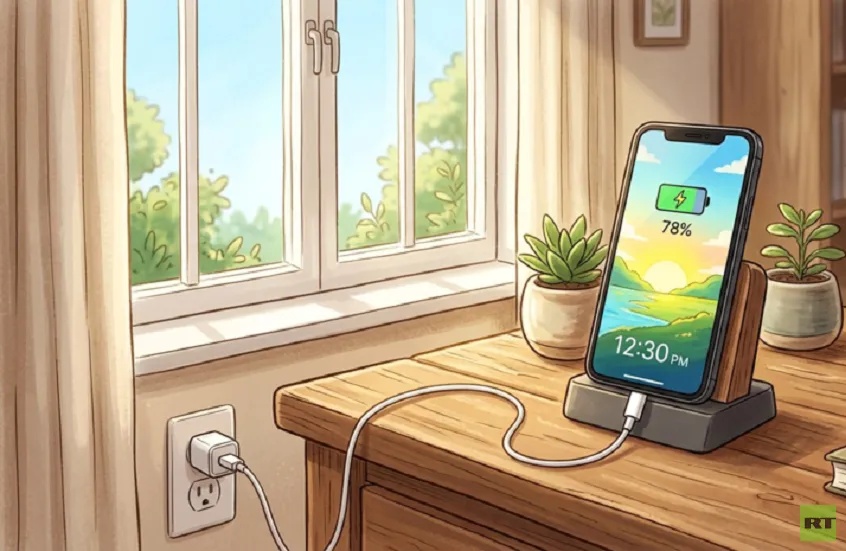
An expert in technology has warned that frequent partial charging of smartphones can significantly accelerate battery capacity degradation over the long term. Dr. Alexey Dvilianov, an Associate Professor at the Russian University of Technology, explained that while a phone charger can be left plugged into an electrical outlet without being connected to the device to avoid fire and electric shock risks, there are other consequences. According to Dr. Dvilianov, modern pulse power supplies include built-in protection against short circuits and overheating, but they are not considered entirely safe from an engineering perspective. He noted that this is not about immediate failure but rather a gradual deterioration of components and invisible losses that affect the phone's lifespan and household energy efficiency. The expert elaborated that modern phone power control units cut off current when charging reaches 100 percent. However, if the charger remains continuously connected near the phone, the power supply continues to generate an electromagnetic field in the cable. He added that when the charge level drops to 99 percent, the controller initiates recharging. These repeated partial cycles, which can occur 5 to 10 times per night, create what is known as "peak mode" for the controller's operation, leading to excess heat generation within the battery. Dr. Dvilianov asserted that this situation will not damage the battery within a month, but after a year, the battery might lose between 15 to 20 percent of its capacity, compared to the 10 percent expected with moderate use, describing this as the cost of negligence. Therefore, he emphasized the importance of disconnecting the charger immediately after charging is complete to preserve the lifespan of flagship smartphone batteries. He also cautioned against covering a plugged-in charger with cloth or paper. Despite minimal heat dissipation in idle mode, dust accumulation and lack of ventilation could lead to localized overheating and melting of the plastic casing.