
China Unveils 'Flying Wing' Passenger Aircraft Design Inspired by B-2 Stealth Bomber
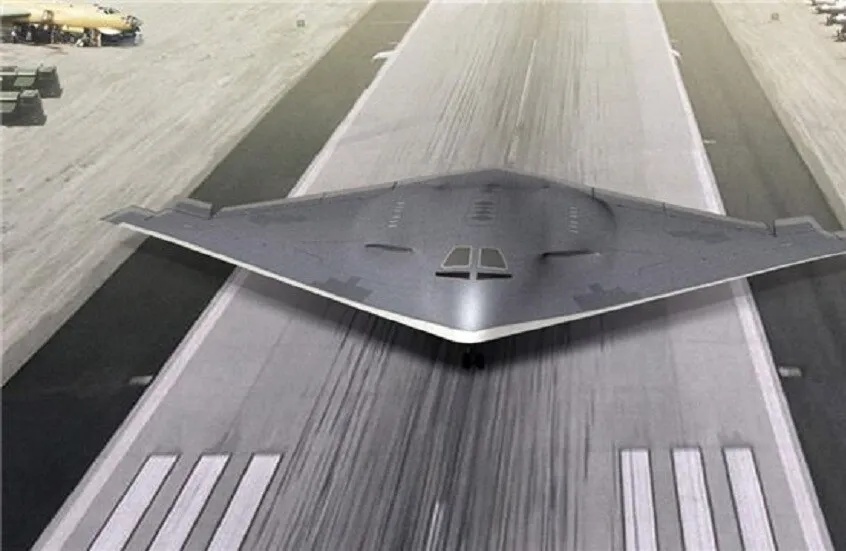
China's Aerodynamics Research and Development Center has unveiled a new "flying wing" passenger aircraft design, resembling the US B-2 Spirit strategic bomber, capable of carrying over 800 passengers. The aircraft is exclusively intended for civil aviation. Unlike traditional civil aircraft, this design lacks the conventional division into a fuselage, wings, and tail, as its main body is integrated into a single, broad lifting structure. This design contributes to an increase in usable internal space and an improvement in overall aerodynamic efficiency. The proposed dimensions of this aircraft significantly exceed those of current civil aircraft. The design measures 43 meters in length and 85 meters in width, with a wingspan approximately 1.6 times that of the B-2 Spirit. Its declared capacity surpasses 800 passengers, which is about 250 passengers more than the Airbus A380, the largest production passenger aircraft, which typically accommodates around 555 passengers. According to the designers, this project is not a production-ready aircraft but rather a research platform for studying the aerodynamics of "flying wing" aircraft. The design serves as a reference model for wind tunnel tests, validating calculation methods, and calibrating specialized testing equipment. Published specifications for this aircraft include a wing area of approximately 1395 square meters, a leading-edge sweep angle of 28 degrees, a trailing-edge sweep of 37 degrees, and a planned cruising speed of 0.8 Mach. Currently, there is no full-scale prototype. Therefore, tests are being conducted on a 1:52 scale stainless steel model, approximately 0.8 meters long with a 1.6-meter wingspan. This model has undergone a series of tests in a 2.4-meter supersonic wind tunnel at speeds ranging between 0.4 and 0.8 Mach. The maximum lift-to-drag ratio reached approximately 20 at speeds below 0.7 Mach, dropping to 17.6 at 0.8 Mach. This direction is part of China's extensive program to develop its civil aircraft industry. Work is currently underway on the C929 wide-body, long-range aircraft, slated for its first flight in 2030, as well as the C949 supersonic passenger transport aircraft.