Baghdad Municipality warns of violations impact on Baghdad water supply
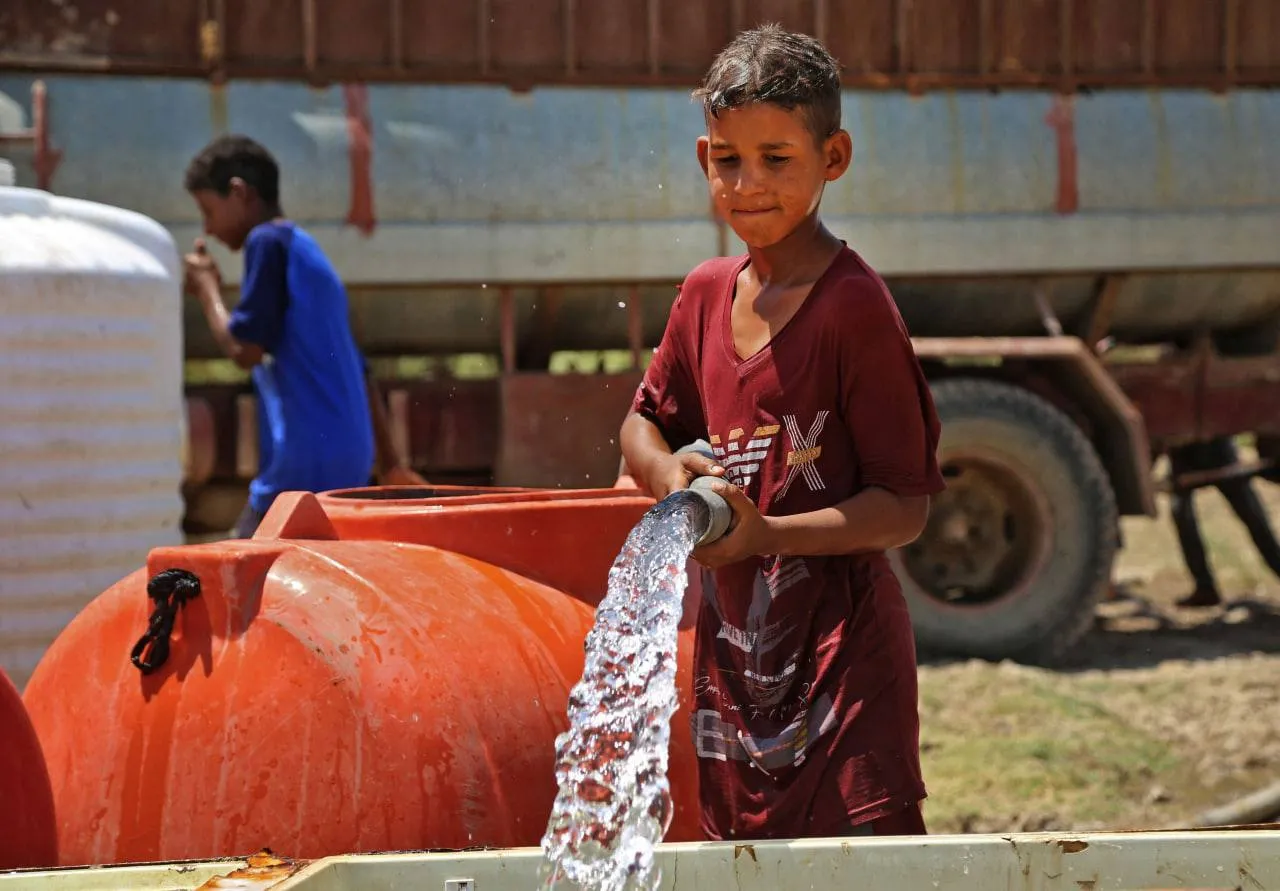
The Baghdad Municipality warned today, Monday, that violations significantly impact water waste and reduce the quantities of water reaching citizens.
The spokesperson for the Baghdad Municipality, Adi Al-Jandil, said in a statement to the official news agency that "there are violations on the drinking water network inside the capital, Baghdad, including transmission lines and internal networks," noting that "the municipality's mobile teams, in coordination with the guard and security directorates, monitor these violations periodically, particularly on transmission lines, and if any violation is detected, it is permanently cut off and closed."
Al-Jandil explained that "some of these violations occur when lines pass through agricultural areas, where they are sometimes exploited for irrigation and other times for fish farming," pointing out that "the Baghdad Municipality is working to close outlets opened without official approvals to maintain the stability of the water supply and prevent waste."
He added that "the municipality continues to distribute water meters, and has taken measures to facilitate citizens obtaining them through the 'Ur' platform and an electronic form that allows quick and easy application," noting that "the citizen receives a notification from the Baghdad Municipality after completing the transaction and receiving the meter."
He clarified that "the importance of the meter lies in organizing consumption calculation based on the actual quantity of water consumed, instead of the arbitrary estimation adopted in the absence of the meter, which guarantees a more accurate calculation and lower cost for the citizen, stressing that the municipality is moving forward with distributing meters continuously and with facilitated procedures."
He pointed out that "there is continuous coordination between the Baghdad Municipality and service departments, foremost among them the Ministry of Electricity, to secure the necessary energy for filtration and water production stations, because these stations need continuous electricity to ensure their continued operation," noting that "some of these stations have been exempted from power cuts, and in the event of any malfunction, the relevant authorities work to restore power quickly, because a number of stations currently operate at half of their design capacity."
He emphasized that "violations significantly affect increased waste and reduce the quantities of water reaching citizens, especially during the summer season and peak periods, particularly on the outskirts of Baghdad," calling on citizens to "preserve the networks and not violate them or waste water in incorrect uses, to ensure a fair distribution of water in all areas of the capital."
He noted that "the Baghdad Municipality continues awareness campaigns through the Community Awareness Department, social media platforms, and educational screens, aiming to establish a culture of correct water consumption and enhance cooperation between the citizen and the municipality to preserve produced water quantities and ensure service reaches everyone."
Al-Jandil mentioned that "regulatory teams belonging to guards and security execute ongoing campaigns to remove violations and close non-compliant outlets, particularly those linked to washing and lubrication workshops and some other activities," calling on their owners to "obtain official approvals to avoid fines and applicable legal measures."
Masella Voice Team
You Might Also Like
Reconstruction and Development Bloc Returns to Parliament Sessions Following Referral of MP Al-Kilabi to Disciplinary Committee
7 hours ago
Federal Supreme Court Annuls Decision Banning Foreign Ownership and Investment in Iraq
7 hours ago