Turkish President Calls for UN Reform, Reaffirms Support for Iraq's Stability
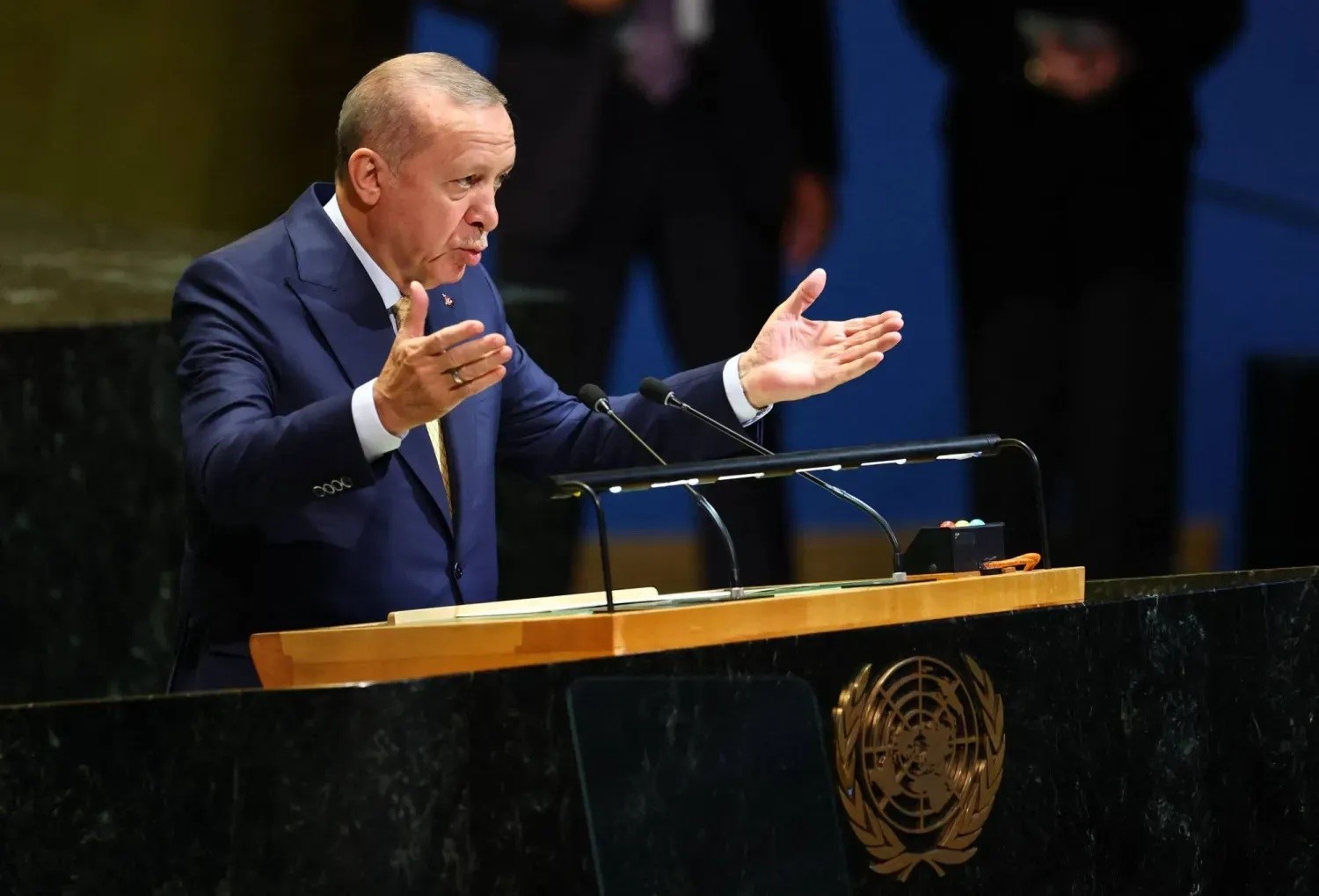
Turkish President Recep Tayyip Erdoğan affirmed on Tuesday his full support for the Iraqi government's efforts to strengthen state authority and consolidate stability in the country. Speaking before the United Nations General Assembly, Erdoğan highlighted Turkey's cooperation with Iraq on implementing strategic transport and energy projects, notably the Development Road project, aimed at enhancing regional prosperity. In another context, Erdoğan expressed regret over Palestinian President Mahmoud Abbas's absence from the General Assembly meetings, urging countries that have not yet recognized the Palestinian state to reconsider their stances. He also delivered strong statements regarding the situation in the Gaza Strip, noting that over 74,000 people have died in three years due to what he described as "Israeli state terrorism," characterizing Gaza as a "death camp" and "the largest graveyard for children in the world." He added that the West Bank suffers from settler violence and terrorism, and Muslims are denied access to their holy sites there. The Turkish President criticized the United Nations, stating that it was founded to maintain peace and security but is "no longer able to fulfill its role or is being prevented from doing so." He condemned the conditions in Gaza, asserting that "no one with a conscience can turn a blind eye" to what is happening. He mentioned that the number of casualties in Gaza has exceeded 1,500 since the ceasefire, and the Strip has become "the most inhumane and shameful detention camp of our era." He further stated that the Palestinian resistance agreed to the second phase of the peace plan, but Israel refuses to end the occupation, emphasizing that "an international system based on only five countries cannot be a just system." He called for reforming the Security Council and increasing international pressure on Israel to end the war. Regarding regional affairs, Erdoğan explained that the defensive alliance established by his country with Saudi Arabia and Pakistan strengthens solidarity among these three nations and supports finding solutions to regional problems from within. He added that these countries continue to work with relevant parties to end the atmosphere of conflict and war that erupted in the Gulf. He warned against attempts to expand the scope of conflicts and clashes to neighboring areas, stressing that such actions "serve no one's interests." On maritime navigation, the Turkish President emphasized the necessity of preserving freedom of navigation in the Strait of Hormuz. He also indicated that recent attacks on commercial vessels in the Black Sea are "unacceptable regardless of who perpetrates them," affirming ongoing communications aimed at restoring safe navigation in the Black Sea and ensuring food security.