
Record Low River Levels Threaten German Economy
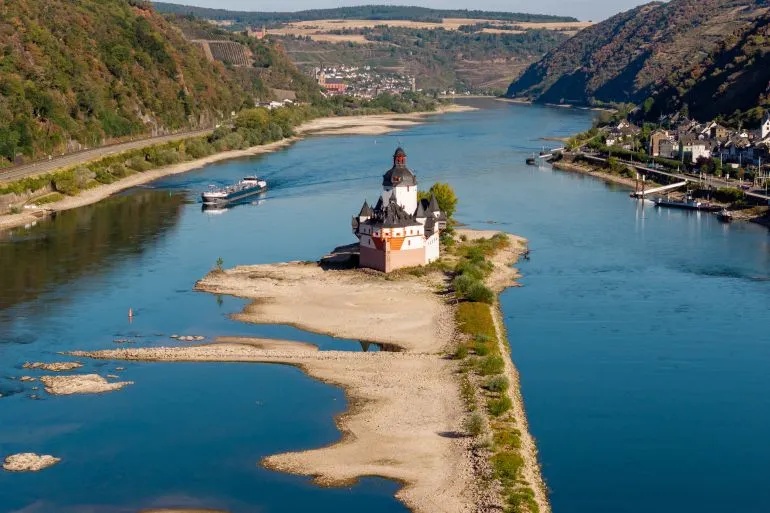
Germany is experiencing a sharp decline in its major river water levels, raising serious concerns about disrupted transport and increased costs for essential goods. German economist Veronika Grimm warned that this drop in water levels directly impacts the chemical industries sector and energy markets, further complicating the transport of crude oil to refineries. Grimm clarified that companies' ability to absorb the crisis's effects and its repercussions on prices varies based on their available storage capacities. German rivers, especially the Rhine, play a pivotal role in the supply chain for transporting raw materials, fuel, and industrial products. Consequently, a decrease in their water levels has significant implications for supply chains. Images from the Rhine River in Düsseldorf show water levels reaching their lowest historical points, complicating inland shipping operations and negatively affecting Germany's economic activity. Despite forecasts of rain in the coming days, these conditions underscore the necessity for long-term strategies to adapt to climate change challenges. Grimm criticized the lack of foresight in German policies to address such challenges. She considered suspending the Sunday truck ban a potentially correct measure in the current circumstances but emphasized the importance of proactive preparation to avoid resorting to emergency solutions. Grimm also affirmed that deepening riverbeds is not a comprehensive solution to the problem of low water levels; while it might be necessary in some areas, it requires careful consideration of its environmental impacts. She called for clear plans to prioritize transportation during periods of low water levels instead of relying on temporary measures. These warnings come as Germany faces significant climate challenges, amidst growing concerns over rising commodity costs due to increasing pressures on the transport, industry, and energy sectors.