Iranian Revolutionary Guard announces container ship sinking in Hormuz Strait
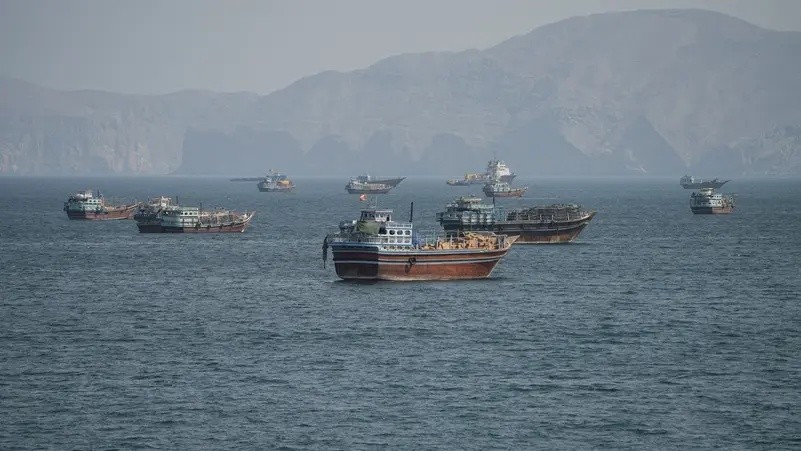
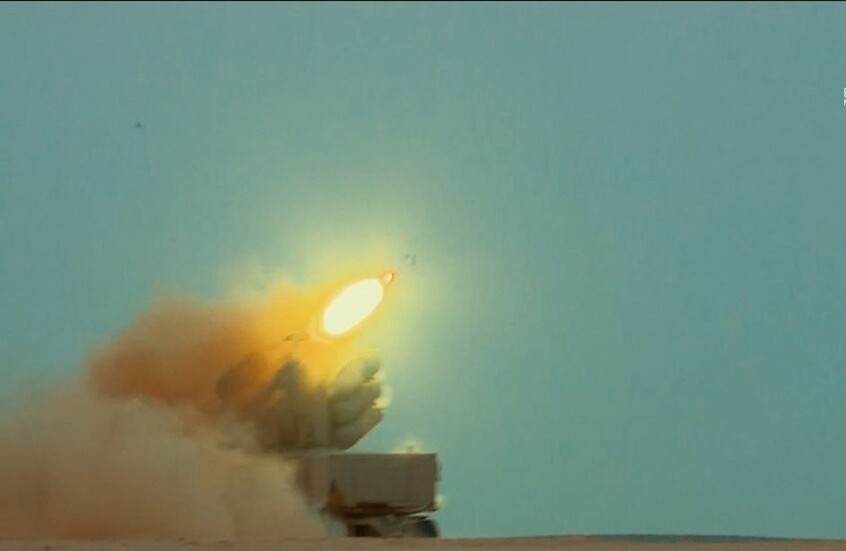
Concurrently with Washington's renewed warnings to Tehran regarding the potential resumption of military operations, the Iranian Islamic Revolutionary Guard Corps revealed on Wednesday the sinking of a container ship resulting from a collision with a naval mine while attempting to cross the Strait of Hormuz via a route described as unauthorized. The public relations department of the IRGC naval forces clarified that the "violating" vessel sought to cross through a dangerous and prohibited route within the vital Strait of Hormuz corridor, which led to its collision with a naval mine causing a massive fire on board. It added that the ship, carrying more than 2,500 containers, sank entirely in the southern waters of the Strait of Hormuz due to the ferocity of the flames, while the official announcement did not specify the ship's name or the flag it flies. In a related context, the United Kingdom Maritime Trade Operations center received a report stating that a container ship was attacked by an unknown projectile while sailing out of the Strait of Hormuz, noting that the 19,000-ton vessel sustained minor damage without any reported casualties and was able to continue its journey normally. The center indicated that the relevant authorities are investigating the circumstances of the incident, urging all vessels transiting the area to exercise utmost caution and immediately report any suspicious movements. The ship sinking incident came amid a continuous escalation of risks surrounding maritime navigation in the Strait of Hormuz, alongside ongoing military tension between Tehran and Washington, and growing fears related to naval mines and strict restrictions on commercial vessel passage. The Revolutionary Guard had previously announced last Sunday that a giant oil tanker collided with a naval mine while attempting to cross the corridor via the southern route, resulting in an explosion and a fire inside the engine room. Iranian reports indicated at the time that the tanker was the third among what the Revolutionary Guard described as violating vessels catching fire since Saturday, meaning that four tankers and ships have sunk since the beginning of the current week. These incidents fall within a series of repeated Iranian threats to vessels attempting to sail without adhering to the restrictions and instructions imposed by Tehran, at a time when concerns regarding the security of vital waterways and the repercussions of ongoing escalation on global energy supplies are intensifying. It is worth noting that divergent estimates regarding the size of Iran's naval mine arsenal exacerbate concerns over navigation security in the Strait of Hormuz and adjacent waters, as these estimates range from about five thousand mines according to the Iranian account to reaching twelve thousand mines according to US estimates, figures that could not be independently verified. On the diplomatic front, Iran had previously put forward a proposal during United Nations General Assembly meetings involving the possibility of reopening the Strait of Hormuz and resuming normal navigation within one week provided certain conditions are met, while US President Donald Trump rejected the initial formulation of the plan before entering talks to introduce modifications. Conversely, a tone of escalation dominated Trump's rhetoric toward Tehran during a campaign rally held in Wasilla, Alaska, last Tuesday, where he stated that everyone should wait to see American actions against Iran, explaining that a heavy blow would be dealt to it. These statements coincided with leaks from American and Israeli circles indicating that Trump and Israeli Prime Minister Benjamin Netanyahu discussed the possibility of launching a new extensive military operation targeting Iran ahead of the Israeli elections and the US midterm elections, amid growing Israeli fears of Iranian efforts to rebuild its nuclear capabilities. In light of these facts, commercial navigation in the strait faces severe security and economic challenges given the strategic role played by the corridor in transporting global energy supplies.