Chinese Military Study Warns of "Nuclear Terrorism," Citing Japan as Key Risk
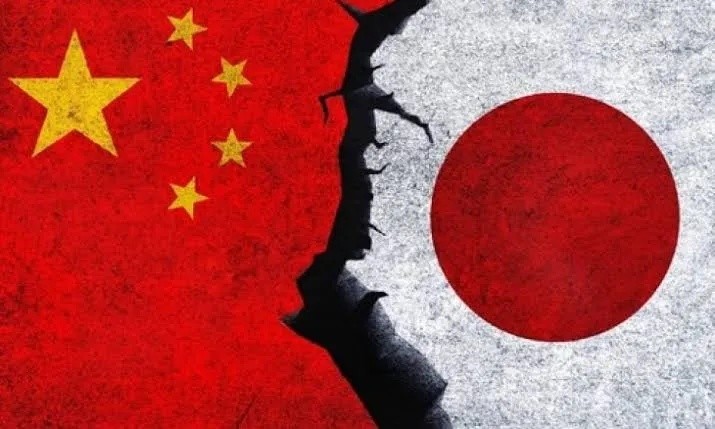
A new study conducted by the Rocket Force of the Chinese People's Liberation Army (PLA) has called on Chinese cities to prepare for potential nuclear attacks, specifically singling out Japan as a "key danger signal" for the international community. The study indicates that the likelihood of a widespread global nuclear war is "relatively low." However, it did not rule out the possibility of small or medium-sized nations, which possess or could potentially possess nuclear weapons, driven by geopolitical or religious conflicts, carrying out a single nuclear terrorist attack on neighboring countries or major cities of great powers. The study raises questions about the specific mention of Japan. The research highlights that Tokyo has not yet joined the Treaty on the Prohibition of Nuclear Weapons, the first legally binding international agreement banning nuclear weapons, adopted in 2017. The study also claims that Japan is currently considering changes to its long-standing "Three Non-Nuclear Principles," which stipulate not possessing, producing, or allowing the introduction of nuclear weapons. The study states: "Japan has not yet joined the Treaty on the Prohibition of Nuclear Weapons, and the current Japanese government is openly considering revising the principle of 'non-introduction of nuclear weapons' within its 'Three Non-Nuclear Principles,' which sends a significant danger signal to the international community." In a related context, the five permanent members of the United Nations Security Council—China, the United States, Russia, Britain, and France—issued a joint statement in January 2022 affirming that "a nuclear war cannot be won and must never be fought." However, the PLA study warned that "once some countries or terrorist groups risk such a danger, the possibility of Chinese cities being subjected to a nuclear terrorist attack cannot be ruled out." In a separate assertion, an official Chinese report issued last January claimed that Tokyo "may have already secretly produced plutonium used to make weapons" and possesses "the technological and economic capabilities to achieve nuclear armament in a short period of time." The same report also alleged that Japan "has established a comprehensive nuclear fuel cycle system and possesses strong nuclear industrial capabilities." The study also addressed a scenario of a potential nuclear attack on a major Chinese city. A study conducted by the PLA Rocket Force modeled a scenario in which a major Chinese city is subjected to a single low-yield tactical nuclear terrorist attack. Based on historical data from the Hiroshima bombing in Japan in 1945, along with simulations conducted worldwide, researchers identified a range of challenges that medical teams might face, including hazardous conditions, widespread social disruption, and complex injury patterns. Beijing has already established an emergency rescue network comprising over 30 bases for treating victims of any nuclear attack. Researchers called for expanding treatment capacity, providing additional resources, and enhancing specialized training in this field. They also recommended that local authorities store emergency supplies, including antibiotics and radiation protection equipment, and maintain them in a state of "combat readiness." Public awareness campaigns on nuclear and radiological safety, rescue protocols, and preventive measures should also be strengthened to reduce panic and irrational behavior during potential emergencies. Compared to a medical response to an incident at a civilian nuclear facility, even a low-yield nuclear terrorist attack could lead to catastrophic casualties and complex, multiple injuries. The authors wrote that such an event would pose a "tremendous test" to the medical capacity of any city or nation, urging China to "prepare for a difficult day." Beijing has long accused Tokyo of pursuing "re-armament" and has frequently expressed its suspicions regarding Japan's nuclear ambitions.