
British concerns grow following US bomber withdrawal from Fairford
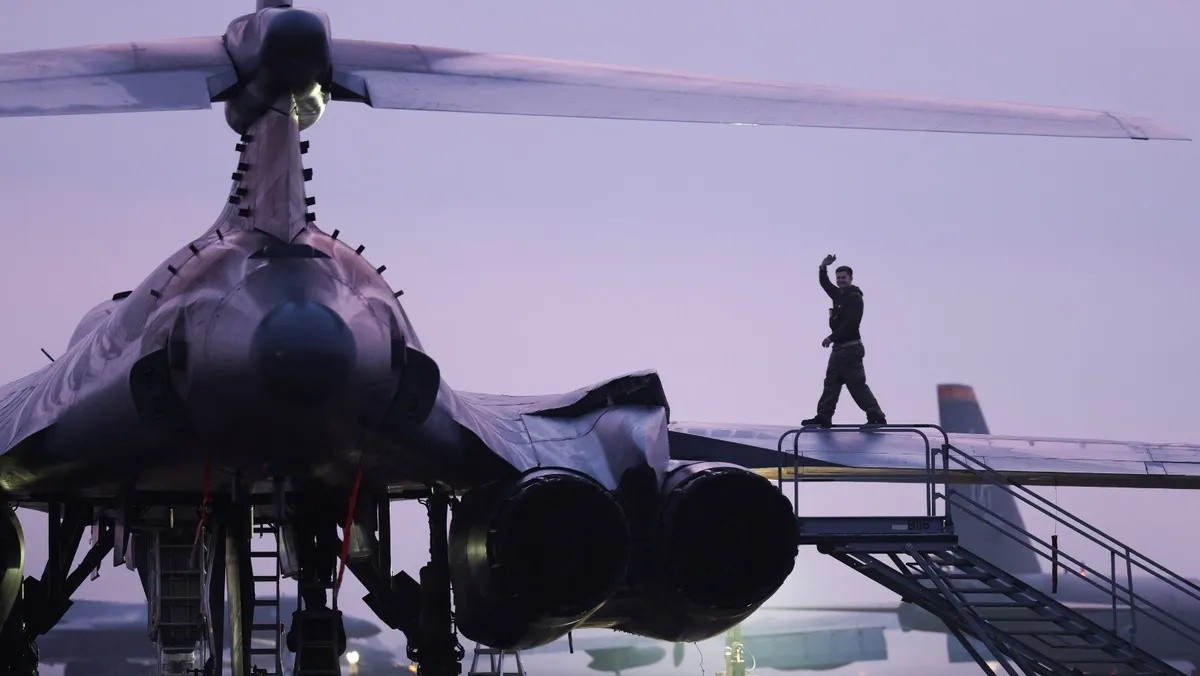
British concerns have grown regarding escalating security threats targeting military facilities, following US President Donald Trump's decision to withdraw B-1 bombers from a British air base due to what Washington described as "terrorist threats." Current and former British officials stated that this move might encourage Tehran and Moscow to increasingly rely on proxies to carry out sabotage attacks. The officials noted that Britain is worried hostile nations might conclude they can force changes to Western defense arrangements and destabilize adversaries at a relatively low cost by employing local criminals for proxy attacks. These concerns highlight emerging tensions between British Prime Andy Burnham's newly formed government and the Trump administration, after the US president stated that the aircraft did not leave the Royal Air Force base in Fairford, western England, by accident. Fairford air base is one of the most prominent strategic sites used to support US air operations. In this context, a US administration official explained that the United States always makes decisions with utmost caution, stressing that its forces are well-equipped to face any potential Iranian threat. A Pentagon official also affirmed that the US will continue assessing risks surrounding the bases it uses and take appropriate measures to protect personnel. The aircraft were relocated following reports of a plot to target the Fairford base, with Burnham suggesting Iran was likely involved. This led to the arrest of several men on suspicion of preparing terrorist acts, though many were later released on bail, while investigators stressed they are keeping all options open. It is worth noting that Iranian threats against the base, used by the US as a launchpad for Middle East operations, have risen due to the Iran war. US Vice President JD Vance reiterated that the planes were moved out of extreme caution to protect US military personnel. Nevertheless, British officials remain confident in the base's high degree of protection and close monitoring of all threats, considering the risks serious but the probability of a successful attack low. Informed sources indicated that patrol sweeps were intensified before the incident and surveillance measures enhanced, including the deployment of anti-drone equipment. They added that drones represent one of multiple threats facing the base alongside other forms of sabotage, though this does not mean the likelihood of breaching the base's multi-layered security is high. The sources pointed out that military officials from other nations hosting British bases have contacted London since the US relocation to inquire if their countries' risk levels have increased, and were reassured that the bases boast strong defenses. While some US officials speculated Iran might seek to emulate the Ukrainian drone attack that destroyed Russian bombers last year, current and former British officials largely dismissed the likelihood of a similar successful attack. Meanwhile, US Secretary of State Marco Rubio stated Monday that a foreign entity was involved in the incident near the Fairford base without providing evidence. Informed sources reported that communication between the US and Britain regarding the reasons for the withdrawal was limited, leaving some senior British officials baffled by the rapid redeployment, adding that the United States has a low tolerance threshold for risks threatening its equipment. In the same vein, former RAF commander Greg Bagwell criticized the manner in which the US withdrawal was announced and handled, describing it as vague at best and highly detrimental to relations and the relative security of British bases, contrasting with the actual reality of joint intelligence coordination.