Beijing Bolsters Naval Presence Around Taiwan Amid Continuous Escalation
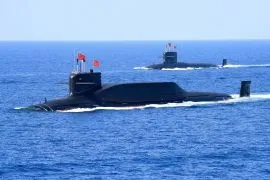
Taiwan's surrounding waters are witnessing a significant escalation in the Chinese naval presence, as Beijing intensifies its efforts to assert control over Taipei. This is manifested in a near-permanent deployment of warships around the island since the beginning of the current decade, according to reports and security sources in the region. Informed security sources indicated that Chinese naval vessels, including guided-missile destroyers, were deployed in strategic locations surrounding Taiwan late last month. These sources suggest that this move reflects a reality that has become almost daily in 2024, rather than merely transient demonstrative military exercises. Since the start of the decade, China has intensified its military and diplomatic activities towards Taiwan, which it considers an integral part of its territory, utilizing a wide range of pressure tools. This comes as Beijing has solidified its position as a rising global power. This strategy includes intensive diplomatic efforts to isolate Taipei internationally, alongside continuous military movements near the island, home to approximately 23 million people. Security reports affirm that China employs its air and naval forces almost daily to approach the area surrounding Taiwan, as part of a sustained pressure campaign aimed at demonstrating its military superiority and its ability to impose facts on the ground. The Chinese Navy is a pivotal element in this strategy, described as the largest in the world by number. Recent years have seen a massive expansion in its capabilities, including the construction of a significant number of new and advanced destroyers. Previously, a single Chinese warship was tasked with sailing near the Taiwan Strait. However, this pattern changed significantly in 2020 when two additional ships were deployed, stationed north and south of the island. In 2022, a fourth ship joined, stationed east of Taiwan, leading to a near-permanent presence of vessels around all four sides of the island. Later in 2024, a fifth ship was added, and a sixth is often deployed on the eastern side as well. Security sources indicate that these expansions in naval deployment followed political developments that were not to Beijing's liking. Among these developments were the results of Taiwan's 2020 presidential elections, a high-level US visit to Taipei in 2022, and other subsequent events that contributed to escalating tensions. According to estimates, there are currently between 5 to 6 Chinese warships around Taiwan on a semi-permanent basis, with intermittent increases through additional vessels deployed during different periods to reinforce the presence. A former US military analyst described these movements as representing a "gradual tightening of the siege" around the island, underscoring the escalating Chinese military presence and its increasing pressure on Taiwan. With the expansion of this deployment, the type of Chinese vessels has shifted from small frigates to a mix including larger and more capable frigates and destroyers. This reflects a qualitative expansion in Beijing's naval capabilities and combat efficiency. Reports confirm that Chinese military aircraft conduct frequent approaches to the median line in the Taiwan Strait, while Chinese coast guard vessels enter the waters surrounding small Taiwanese islands. This occurs within a series of military maneuvers launched since 2022 under various names, aimed at demonstrating power. Sources indicate that these operations are not limited to sending political messages; they also provide daily opportunities to gather intelligence on Taiwanese forces' movements and preparations. This is considered part of potential preparations for any future conflict scenario that might arise. Chinese ships continue periodic deployments, each lasting approximately two weeks, and are continuously replaced without relying on a limited fleet, according to security sources monitoring the situation. The vessels typically remain outside the 24-nautical-mile zone that Taipei considers a vital contact area. However, they occasionally cross it as part of so-called joint combat readiness patrols, described as coordinated movements to approach Taiwanese maritime boundaries provocatively. Taiwan responds to these movements by dispatching its warships and coast guard vessels to monitor the Chinese ships until their withdrawal, in operations that can sometimes last up to 48 continuous hours. This response places significant strain on Taiwan's limited naval capabilities compared to its massive Chinese counterpart. Taiwanese authorities indicate that this continuous pattern of movements exhausts forces and negatively affects routine maintenance operations and crew rest, potentially impacting their readiness. In contrast, China collects extensive and detailed data on Taiwanese forces, including their movement methods, communication, and response. This could affect Taipei's ability to achieve surprise in the event of a military confrontation. Military assessments suggest that these intensified Chinese activities could also complicate effective operations for US forces in the region should they intervene to defend Taiwan, further increasing the complexity of the security landscape. Chinese operations are also conducted near the eastern side of Taiwan, including areas close to vital military bases in Hualien and Taitung cities. Security sources consider these movements to have both intelligence and military dimensions, serving as attack training exercises. Security reports view 2020 as a pivotal turning point in Chinese military activity around Taiwan, especially after Beijing set 2027 as a target for its military to be ready for the potential use of force against the island, without this being an actual date for a specific invasion, but rather for forces to be prepared. Subsequent political events, including high-level US visits to Taiwan, electoral developments, and maritime incidents, have also contributed to a noticeable increase in the number of ships deployed around the island. Estimates suggest that monitoring the evolution of the number of Chinese ships around Taiwan is ongoing, with the possibility of further increases in this deployment during the coming period, signaling increased tension.