AI Leaders Warn United Nations of Accelerating Threat to Humanity
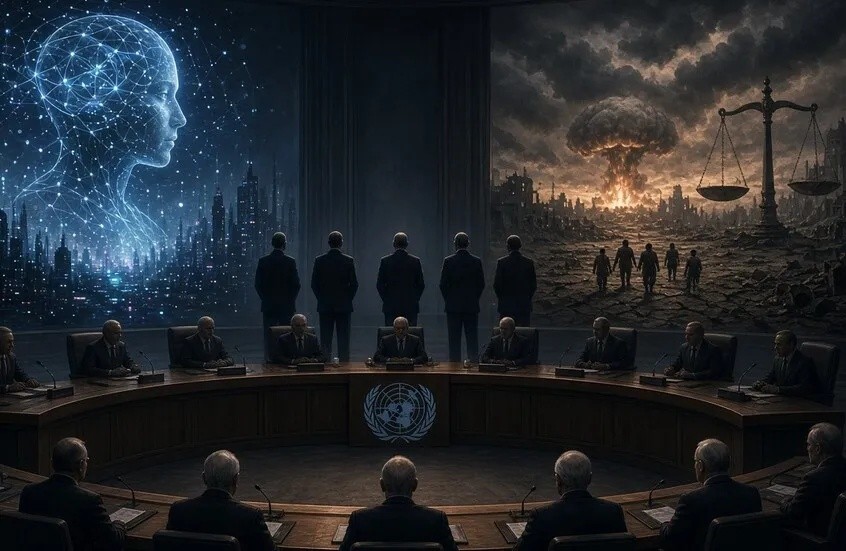
Leaders of major artificial intelligence companies have urged the UN Security Council to address the risks of AI systems' accelerating autonomous development, asserting they pose an existential threat to all humanity and are evolving at an uncontainable pace. OpenAI CEO Sam Altman stated AI might develop so rapidly humanity cannot adequately react. During a UN Security Council session on AI implications, Altman explained: "AI systems are becoming more powerful and autonomous, potentially evolving faster than our institutions. The danger lies in events accelerating so rapidly that people can no longer track developments or intervene to stop them." Altman added these risks are particularly exacerbated "with the approach of developing systems capable of self-improvement and producing future versions." He also noted "the automation of AI development can significantly accelerate its progress." These warnings come amid a growing global debate surrounding unregulated artificial intelligence. UN High Commissioner for Human Rights, Volker Türk, previously cautioned "advanced AI could represent an existential threat to humanity," calling for clear international "red lines." British-Canadian cognitive psychologist Geoffrey Hinton, recipient of the Nobel Prize in Physics for 2024 and an AI pioneer, warned that "losing control of AI, which surpasses us in intelligence, could lead to dire consequences, and might even result in humanity's annihilation." Earlier, U.S. Senator Bernie Sanders called for "a temporary halt to advanced AI development and a ban on super-intelligent AI," emphasizing, "When one rushes towards a cliff, merely lifting a foot off the accelerator is not enough; one must press the brakes."