US House Approves Measure to Limit Trump's War Powers Against Iran
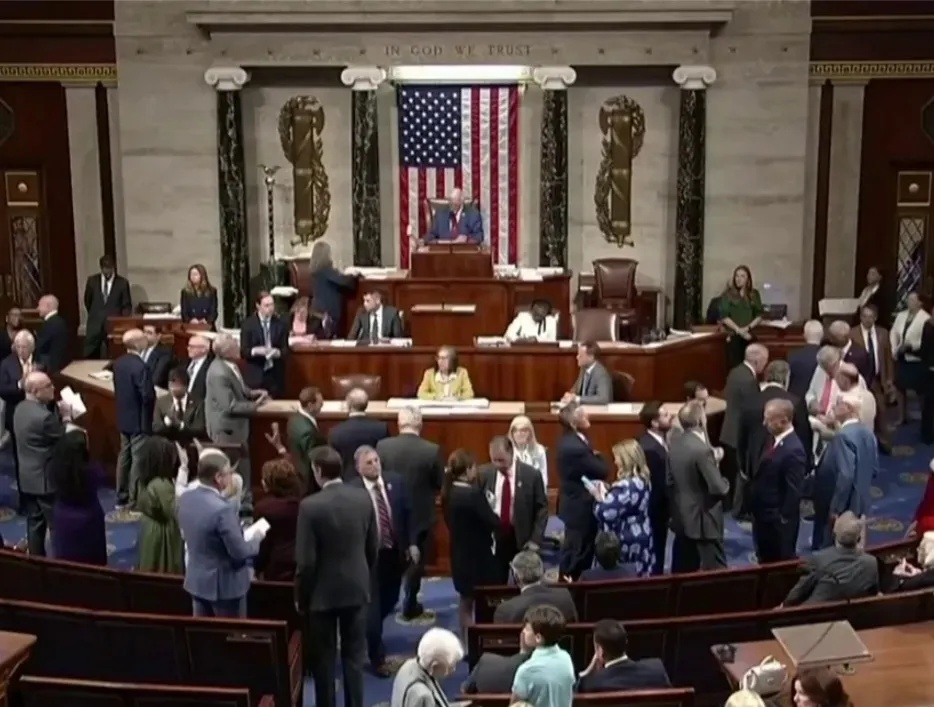
The U.S. House of Representatives voted on Thursday in favor of a measure aimed at restricting President Donald Trump's authority to wage war against Iran without congressional approval. This move reflects growing opposition within Congress to military operations, despite the White House and Republican Party leadership's rejection of the resolution. The measure, introduced by Democratic Representative Pramila Jayapal, was approved by a majority of 214 votes to 208. Four Republican representatives joined Democrats in supporting the measure: Thomas Massie, Brian Fitzpatrick, Tom Barrett, and Warren Davidson. Although the House resolution is widely seen as a political rebuke to President Trump, the measure will not compel the administration to end the war even if the Senate approves it. Concurrent resolutions, which are not sent to the President for signature or veto, do not possess the force of law. The Senate is scheduled to vote later today, Thursday, on a similar measure aimed at reining in Trump's war powers in Iran. This marks the second time the House has voted to limit the President's ability to continue military operations against Iran, but it is the first since the collapse of the memorandum of understanding between the United States and Iran. Democrats have repeatedly pushed for votes on measures to limit Trump's powers in both the House and Senate. This campaign has gradually gained more Republican support, indicating growing dissatisfaction within the party with the ongoing conflict. Some Democrats who support efforts to restrict war powers argue that concurrent resolutions remain legally binding. They point out that courts have not yet definitively ruled on whether they lack legal effect when used in cases related to war powers. On June 4, the House had passed a resolution restricting Trump's powers regarding the war against Iran, which then received the support of 215 members, with 208 members voting against it. The resolution is largely symbolic, as it relies on legally contentious powers under the War Powers Act to limit military operations led by the President. Divisions among Republican lawmakers are escalating regarding the Iran conflict, with midterm elections approaching. While Democrats hope to achieve a "blue wave," Republicans are working to curtail it.