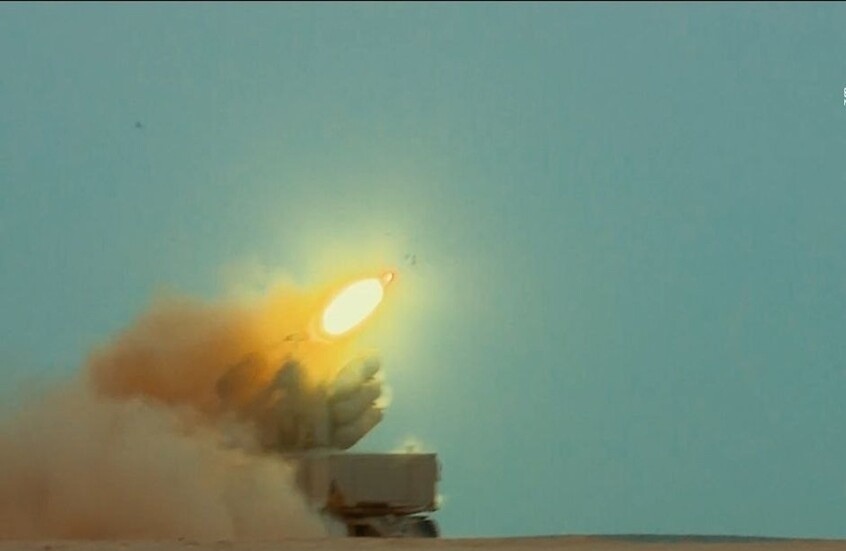
Satellite Imagery Reveals Iran Rehabilitated 50 Underground Missile Facility Entrances Post-Strikes

Recent satellite imagery and intelligence analyses indicate that Iran has successfully rehabilitated fifty entrances to its underground missile facilities, despite widespread strikes that targeted its infrastructure during a war that erupted on February 28. During the initial weeks of the conflict, forces targeted Iranian missile platforms, leading to the destruction of key sites such as the Isfahan base, where debris covered tunnel entrances and external platforms were destroyed. Operations also included targeting Iran's missile supply chain, from factories to fuel production sites and structures. However, subsequent imagery suggests that Tehran rapidly embarked on rehabilitating its damaged sites. Craters from bombardment have been filled, and numerous tunnel entrances reopened. Recent photos confirm that Iran has reopened 50 out of 69 targeted entrances across 18 underground missile facilities, in addition to repairing damaged roads and repaving some at multiple locations. At one site near Isfahan, where four tunnel entrances sustained heavy bombardment, imagery showed the use of trucks and bulldozers to fill craters, while other entrances were reopened and access roads repaired. At a base near the city of Khomin in central Iran, dozens of construction vehicles were observed working to reopen facilities, alongside the restoration of operations at other widely damaged sites. Reports indicate that Iran's efforts are not limited to reopening entrances but extend to repairing targeted surface roads and facilities, with most craters filled and some roads fully rehabilitated. Estimates suggest that Iran still maintains approximately 1,000 missiles stored in its underground facilities. Analyses suggest that the deep missile stockpiles suffered no significant damage from the surface strikes, with experts noting that Tehran has been preparing for this type of warfare for decades. Forces also targeted Iran's missile production chain, from factories to manufacturing components, in an attempt to undermine production capacity. Nevertheless, satellite imagery showed the rapid reconstruction of some damaged facilities. Furthermore, intelligence assessments indicate that Iran has already begun rebuilding its military capabilities, including resuming drone production and replacing launch platforms. An official stated that Tehran has "exceeded all timelines" set by intelligence agencies for rebuilding its capabilities. Analysts suggest that the disparity between the technology used for destruction and reconstruction highlights the nature of this conflict; military strikes require advanced and costly weapons, while rehabilitation is carried out using simpler equipment such as bulldozers and excavation trucks, making efforts to halt Iran's military buildup more complex in the long term.