
Israeli Questions Rise Over Chinese Surveillance Plane's Flight from Egypt via Saudi Airspace
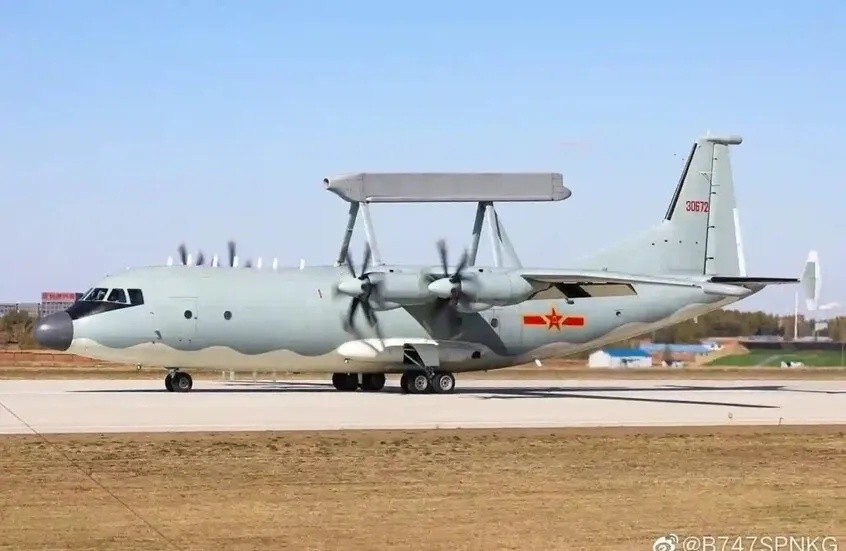
Israeli questions have intensified regarding the true objectives of a sophisticated Chinese electronic surveillance plane's return flight from military exercises in Egypt via Saudi airspace, and the potential for it to collect sensitive intelligence. Open-source flight tracking data in September 2026 monitored the path of the Chinese "Y-9 LG" electronic warfare aircraft as it flew over Saudi airspace near Yanbu on its way back from Egypt, before heading towards Riyadh on its return journey to its base in China. The Chinese aircraft had been present in the region as part of an official deployment by the Chinese Air Force in Egypt, where it participated in the joint military exercise "Civilization Eagles 2026." The official and most probable reason for this route is the aircraft's return from Egypt to China, a process that requires prior diplomatic approval and coordination with Saudi authorities, thereby refuting claims of a secret or hostile flight. The plane flew near the city of Yanbu, a strategic port on the Red Sea coast that hosts large oil refineries, security installations, and Patriot air defense batteries, before heading east towards the capital, Riyadh. This event reflects the deepening security and military relations in the Middle East, especially as the Y-9 LG aircraft is considered a relatively modern platform, equipped with a long-range active electronically scanned array (AESA) radar, and capable of performing long-range electronic jamming, disrupting navigation systems, and blinding enemy radars. This highlights China's diplomatic and military prowess in its engagement with the United States. Saudi Arabia's permission for such a sophisticated intelligence and electronic warfare aircraft to fly in its airspace also indicates a growing level of trust between Riyadh and Beijing, coinciding with ongoing discussions for purchasing defense systems and weapons from China. Although the flight was coordinated, platforms of this type often operate in passive information gathering mode during long flights to calibrate their systems and understand the electromagnetic environment of new regions. However, the probability of collecting direct and dangerous tactical information about Israel during this flight is considered very low, given that the aircraft was monitored near Yanbu and Riyadh. Yanbu is approximately 650 kilometers from Eilat, and Riyadh is over 1000 kilometers from Israel, which severely limits its ability to collect valuable tactical signals, such as Israeli radar frequencies or active defense systems. Furthermore, due to the Earth's curvature, Israeli ground radar signals or air defense systems do not reach a direct line of sight with an aircraft flying at a typical altitude over central or southern Saudi Arabia. If the aircraft had indeed activated its passive collection sensors, its primary interest was likely focused on systems operating in the Red Sea and Saudi Arabia itself, such as Western or American radar and air defense systems deployed in the region to protect against threats from Yemen, rather than Israel. In conclusion of the assessment, it was noted that China would never miss an opportunity to gather high-quality tactical intelligence, especially with an undeniable space for deniability, suggesting that collecting information from Israeli territory was an effort worth pursuing. These developments occur within the context of growing military and security cooperation between Egypt and China, evidenced by a series of joint exercises and maneuvers in recent years. This flight also reflects China's strategic drive to bolster its influence in the Middle East through defense partnerships with pivotal nations such as Egypt and Saudi Arabia, at a time when Riyadh seeks to diversify its arms sources and reduce exclusive reliance on American systems. This provides Beijing with a valuable opportunity to test the capabilities of its electronic systems in a real operational environment close to regional hotspots.