Hormuz Strait Mine Clearance Operation: Washington Reveals Difficult Details
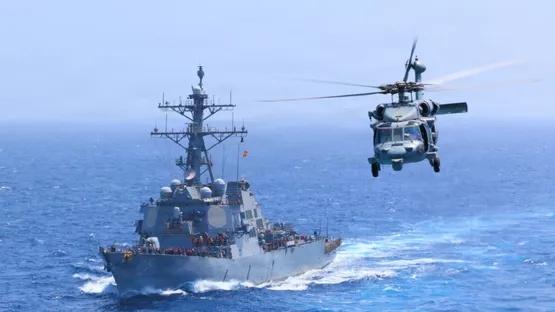
The US Central Command (CENTCOM) has unveiled extensive details of an operation that enabled its forces to clear international navigation lanes in the Strait of Hormuz from naval mines, which are alleged to have been laid by the Iranian Revolutionary Guard. These revelations emerge amidst ongoing internal assessments among Washington's allies, expressing skepticism about the Strait being entirely free of these devices. In an operational update on "X", CENTCOM Commander General Brad Cooper affirmed the success of US forces in removing naval mines from the Strait's international navigation routes. Cooper asserted that "internationally recognized transit lanes in the Strait are now clear of Iranian naval mines," explaining this mission coincided with the continued enforcement of the naval blockade against Iran and persistent efforts to maintain open commercial shipping through Hormuz. **Execution of the Mine Clearance Operation** General Cooper presented a marine map of the Strait of Hormuz, highlighting the internationally recognized Traffic Separation Scheme (TSS). He described the TSS as a "road network for ships in the oceans," comprising dedicated lanes for opposing ship movements, separated by a line to ensure safe distances during passage through the narrow, strategic waterway. These lanes, according to Cooper, represent historical international navigation routes through Hormuz. US forces diligently worked for months to clear them of naval mines. The CENTCOM commander noted that the operation "utilized a mix of advanced military capabilities, including US Navy divers, Navy Special Operations Forces (Navy SEALs), alongside air units from the Army, Navy, Air Force, and Marine Corps." Cooper further stated that the operation's conditions were "extremely difficult and dangerous," yet US forces successfully completed the mission, declaring international navigation lanes "open today and secure for passage." **Protection of Shipping and Oil Transit** Beyond mine clearance, Cooper reported that US forces aided approximately 1500 commercial vessels in traversing the Strait of Hormuz over recent months by providing coordinated protection. He clarified that these ships collectively carried nearly 750 million barrels of crude oil destined for global energy markets, underscoring the Strait's critical economic significance. Conversely, the CENTCOM commander confirmed Iran has not exported oil from its coasts since the naval blockade's resumption in mid-July. US forces prevented any vessel from entering or leaving an Iranian port without prior authorization, with exceptions solely for humanitarian reasons. Thousands of US military personnel aboard over 20 warships, supported by hundreds of aircraft, were involved in enforcing this effective naval blockade. Cooper also indicated that US forces forced 75 vessels attempting to breach the blockade to return, and disabled three others that failed to comply with issued orders. **Persistent Doubts on Mine-Free Status** Despite the US narrative, complete consensus regarding the Strait's mine-free status eludes Washington's allies. Internal assessments, cited by informed sources to Bloomberg, suggest that while the US has likely made significant progress in clearing international waters, the operation did not eliminate all mines believed to have been laid by Iran. Allies estimate 80 to 150 naval mines still remain, even after US President Donald Trump personally affirmed that the US Navy had cleared or detonated all mines in the international waters of the Strait of Hormuz. Trump had earlier announced the US Navy's report of mine removal or detonation, simultaneously warning Iran that any vessel attempting to lay new mines "will be immediately and systematically destroyed." On his "Truth Social" account, Trump reiterated a "zero tolerance" policy for mine-laying activities. **Mines: A Mobile and Evolving Threat** The complexity of confirming the Strait's mine-free status is compounded by the potential for some mine locations to shift. US allies' assessments suggest that certain mines, even those initially identified and planted in clusters, may have drifted from their original positions due to ocean currents. These allies contend that restoring commercial shipping confidence in the Strait demands a broader international effort, combining advanced mine clearance technology with robust aerial and naval protection for transiting vessels. On the other hand, Tehran asserts exclusive knowledge of mine locations in the Strait. Iranian Deputy Foreign Minister Kazem Gharibabadi previously warned that any American mine-clearing vessels would be considered "excellent targets" for Iranian armed forces. Notably, the Sultanate of Oman and Iran jointly unveiled a proposed framework for managing the Strait of Hormuz last Tuesday. This proposal includes "establishing a temporary joint navigation corridor through the Strait of Hormuz and agreeing to implement a joint project for mine clearance in the Strait." Since the conflict's eruption in late February, Tehran has sought to establish its own navigation route, aiming to control traffic through this vital strategic waterway. Historically, ships traversed it freely under international maritime law. Shipping traffic through Hormuz has sharply declined again following the collapse of the ceasefire agreement finalized last June.