Escalating Tensions with Iran: Trump Faces Risk of Drifting into "Forever War"
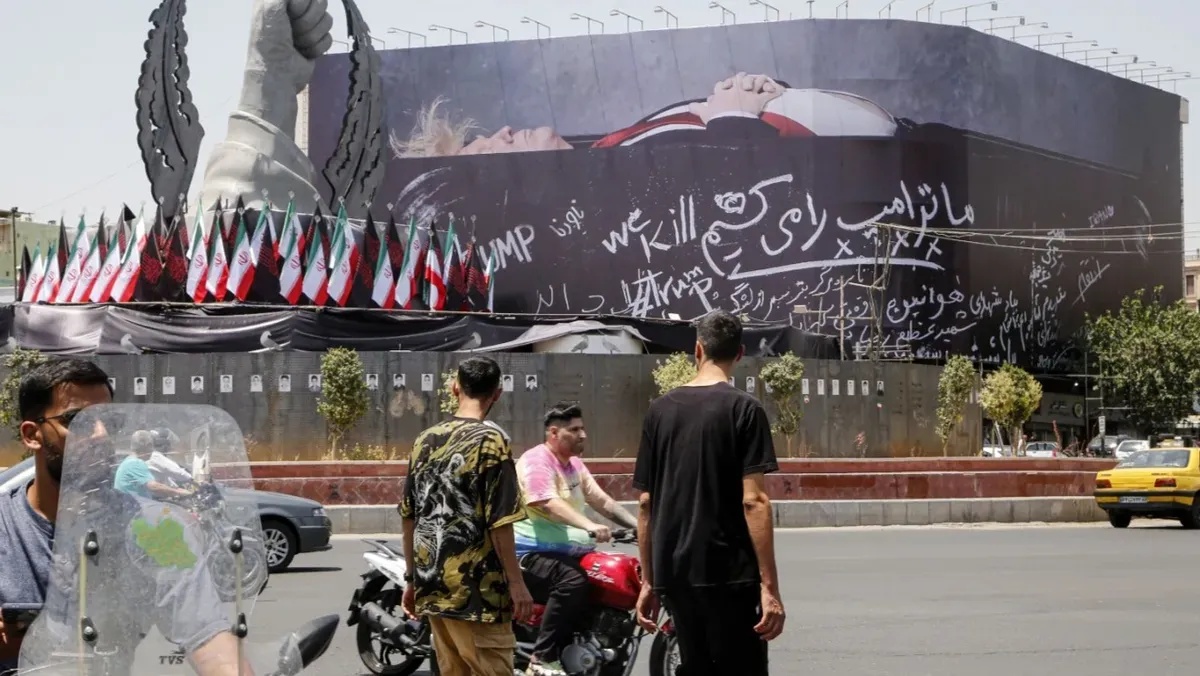
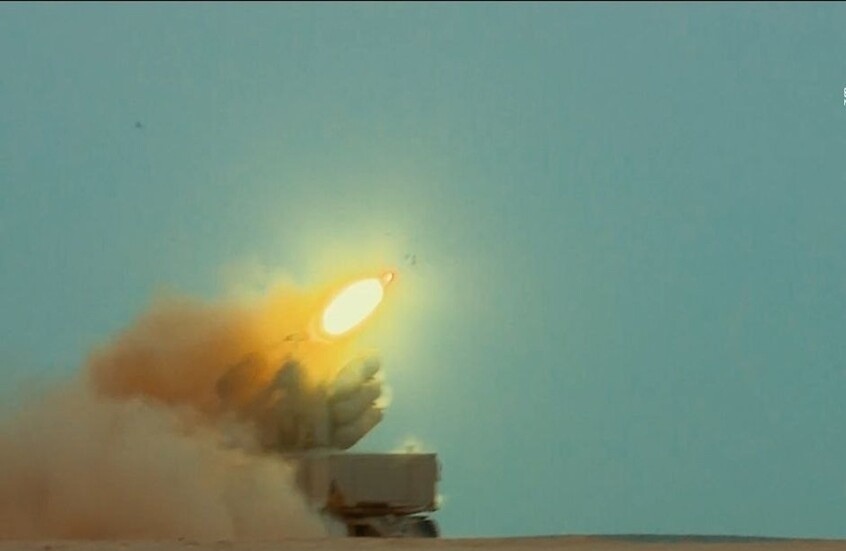
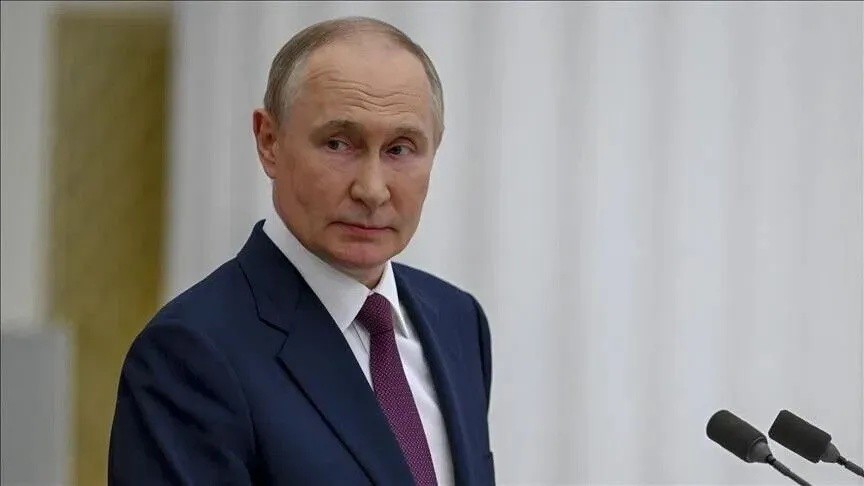
Former U.S. President Donald Trump faces the risk of being drawn into what is described as a "forever war" in Iran, following the recent American escalation against Tehran. These developments occur amidst stalled diplomatic efforts, persistent escalating tensions around the vital Strait of Hormuz, and growing doubts about the military's ability to achieve lasting political objectives, according to prominent media reports and analyses. No one embarks on a war expecting it to last forever. However, since the Vietnam War, American administrations have repeatedly found themselves in conflicts that seemed "eternal," until a subsequent president decides that their financial and political costs no longer justify continuation, declares victory, and brings troops home. Critics argue that President Trump may have fallen into the same trap in the context of the crisis with Iran. He campaigned on a promise to end wars, not start them, and to avoid entangling the United States in "forever wars," especially in the Middle East. Yet, these critics believe he now faces the risk of sliding into this scenario in Iran. The confrontation with Iran, which has seen alternating rounds of negotiations and military strikes, has so far failed to achieve Trump's stated goals, whether regime change in Iran or ending its nuclear program. Instead, this confrontation has created a new, seemingly "intractable" crisis: the disruption of navigation in the Strait of Hormuz. With diplomacy at a stalemate, at least for now, President Trump finds himself facing a "renewed conflict" after a presumed ceasefire collapsed and the Strait was blocked. The "memorandum of understanding," which he claimed "achieved everything he sought," despite differing interpretations, collapsed in less than a month. In the context of "forever wars," Ali Vaez, Director of the Iran Project at the International Crisis Group, stated that "both parties viewed the memorandum of understanding as a continuation of war by other means, not a bridge to peace." He considered that the absence of a long-term strategy leading to a sustainable settlement portends "creating conditions that lead to a forever war." The concept of "forever wars" became particularly prominent after the September 11, 2001 attacks and the launch of the so-called "Global War on Terror," which led the United States into prolonged military involvement in both Afghanistan and Iraq. These wars began with the aim of overthrowing hostile regimes, only to end ultimately either without clear resolution or in defeat, after incurring heavy human and financial costs. For his part, Lawrence Freedman, Emeritus Professor of War Studies at King's College London and author of a study titled "The Age of Forever Wars" published last year, said that leaders with powerful armies often fall into what he called "the illusion of short war." He added: "They believe they can achieve a quick victory without suffering negative consequences." Freedman noted that Trump in Iran, like Russian President Vladimir Putin in Ukraine, "both misjudged the limits of military power, setting objectives that could not be achieved, if at all, except through a prolonged conflict." Fears persist that America will be dragged into a new quagmire due to the conflict with Iran, initiated by Trump despite his past criticisms of Democratic opponents over the Iraq and Afghanistan wars. He added that "possessing the most advanced armies is not enough" if "military power is not coupled with a strategy that translates battlefield superiority into lasting political and diplomatic success." Trump faces an additional challenge in his pursuit of victory by relying solely on air and naval power, without resorting to ground troops inside Iran, an option deemed politically unacceptable. The Second Gulf War in 1991 presented a different model, ending quickly and achieving its objectives because President George H.W. Bush set a limited political goal: the expulsion of Iraqi forces from Kuwait. However, this lesson, according to analyses, was not learned by his son, President George W. Bush, during the invasion of Iraq in 2003. In Afghanistan, after President Bush Jr. overthrew the Taliban, he and his successors attempted to reshape Afghan society, but the movement returned to power when Washington lost its will to continue the mission. One view, sometimes embraced by Trump, is that the American president engaged in the confrontation with Iran to end what he considers a 47-year ongoing conflict between the United States and Iran, which began with the fall of the Shah in 1979. Vali Nasr, Professor of International Relations at the Johns Hopkins School of Advanced International Studies, believes that the "forever war" between Washington and Tehran is merely a new round of a conflict that has seen periods of escalation and others of understanding, such as the nuclear agreement concluded in 2015, from which Trump withdrew in 2018. Aaron David Miller, a senior fellow at the Carnegie Endowment for International Peace, said that Trump, pushed by Israel, also entered a parallel "forever war" consisting of the conflict between Israel and Iran, fought through Tehran's proxies in Lebanon and Yemen. With renewed fighting in the Strait of Hormuz, options for Washington and Tehran are dwindling amidst a race against time, electoral pressures on Trump, and fears of escalation that could threaten navigation and global oil markets. Trump is still capable of marketing this unpopular confrontation to his electoral base as a kind of victory and then ending it. But, contrary to many expectations, he appears to be choosing to proceed with escalation, "without a clear path towards a diplomatic settlement," according to reports. Furthermore, his commitment to keeping the Strait of Hormuz open, in contrast to Iran's insistence on maintaining control over it, could lead to a long-term American military involvement, even with the participation of allies. Nevertheless, the Iranian crisis differs from the wars in Afghanistan and Iraq. In both those cases, thousands of American soldiers were deployed on the ground for long periods, ending up fighting entities opposing Washington-backed governments, rather than confronting a state the size of Iran. Moreover, Iran, unlike Vietnam, Iraq, or Afghanistan, can inflict direct economic damage on the United States by disrupting navigation in the Strait of Hormuz, which gives it effective leverage and is a primary reason for its refusal to relinquish control over it. Suzanne Maloney, Director of Foreign Policy at the Brookings Institution, stated that "there will be no return to the situation that existed before the confrontation." She added that "mistaken assumptions and American miscalculations, as happened in Iraq, have changed the balance of power in the region, and the era of completely free navigation through the Strait of Hormuz may have ended." She further added that a "new reality" may emerge, but "with a much larger American military presence in the region," given Iran's ability to target ships whenever it wishes. Vali Nasr, who previously worked on the Afghanistan war file, said that "Washington's interests in this conflict are much less than Iran's," and therefore "the pace of the confrontation begins to slow down for the United States, while the other party remains prepared to maintain the same level of escalation." Nevertheless, a negotiated settlement to the Iranian crisis remains "out of reach." Ali Vaez said that both parties have proven incapable of even adhering to a limited framework agreement that defers fundamental issues to a later time. He added: "If they are incapable of even that, then the last barrier separating intermittent confrontations from an unending war may disappear."