Economic Advisor: 40 Million Citizens Benefit from State Salaries
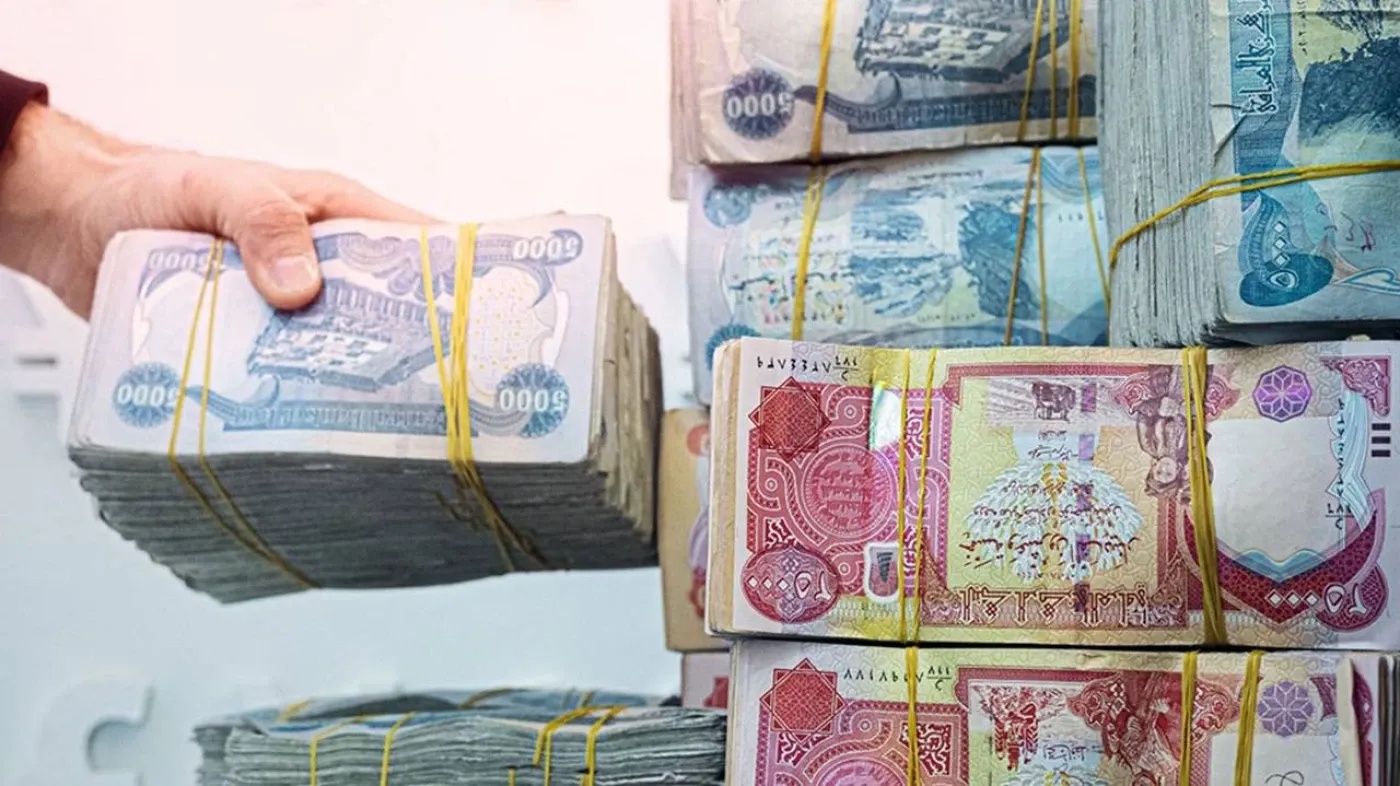
The financial advisor to the Prime Minister, Mazhar Mohammad Saleh, confirmed that approximately 40 million citizens benefit directly or indirectly from state-issued salaries, which in turn require a monthly allocation of 7.7 trillion Iraqi dinars to cover. In a related context, Saleh revealed that the government has internally borrowed between 12 and 14 trillion Iraqi dinars since the onset of the economic crisis, while simultaneously denying the existence of any banking or financial dealings with Iran. Saleh stated, during televised remarks, that Iraq is ranked as the fourth country globally in terms of the extent of state intervention in economic activity, a situation attributed to its rentier nature. He clarified that the monthly government salary bill represents a mandatory commitment for the government. He elaborated that 10 million citizens receive direct salaries, including employees, retirees, and social protection beneficiaries, and that each salary paid is assumed to support four family members or dependents, meaning that nearly 40 million Iraqi citizens rely on these salaries. Regarding the draft budget, the advisor mentioned that the oil barrel price within it would range between 50 and 60 US dollars, with a specific focus on the electricity sector. Saleh denied any current decision to adjust the local currency's exchange rate. He also indicated that Iraq's daily oil production currently exceeds 3 million barrels, with one million barrels allocated to local refineries, while over two million barrels are designated for export and storage. He noted the stability of Iraqi oil exports over the past ten days, remaining above 1.5 million barrels per day. Concerning the energy and trade file with Iran, the financial advisor explained that the volume of imported Iranian gas reaches 18 million cubic meters, supporting the national grid with 4500 megawatts. Saleh reiterated that there are no banking relations or electronic payment transactions between Iraq and Iran, stressing that no dollar payments have been made since 2011. He added that US sanctions imposed on Iran did not cover the import of vegetables and foodstuffs, provided that payments are not made in dollars. Saleh disclosed that Iraq's hard currency reserves have reached 78 billion US dollars, noting the absence of any current external borrowing to support the budget, despite the possibility of needing it in small quantities and with long-term repayment conditions. He concluded by indicating that the total internal borrowing by the state during the crisis period ranged between 12 and 14 trillion Iraqi dinars.